How Food Intolerance Can Pose as Disease
Gastrointestinal upsets are responsible for most days off work and are the most common reason people seek medical attention. Commonly assumed to be caused by infections they can often be the result of food reactions.
Food reactions are becoming more common, spanning all generations and causing a myriad of symptoms. Much of our modern processed food with it's additives and chemicals is stressing our immune systems to over react and lose tolerance to food. These chemicals can destroy our gut bacteria and inflame and damage our gut wall leading to what is known as "Leaky Gut".

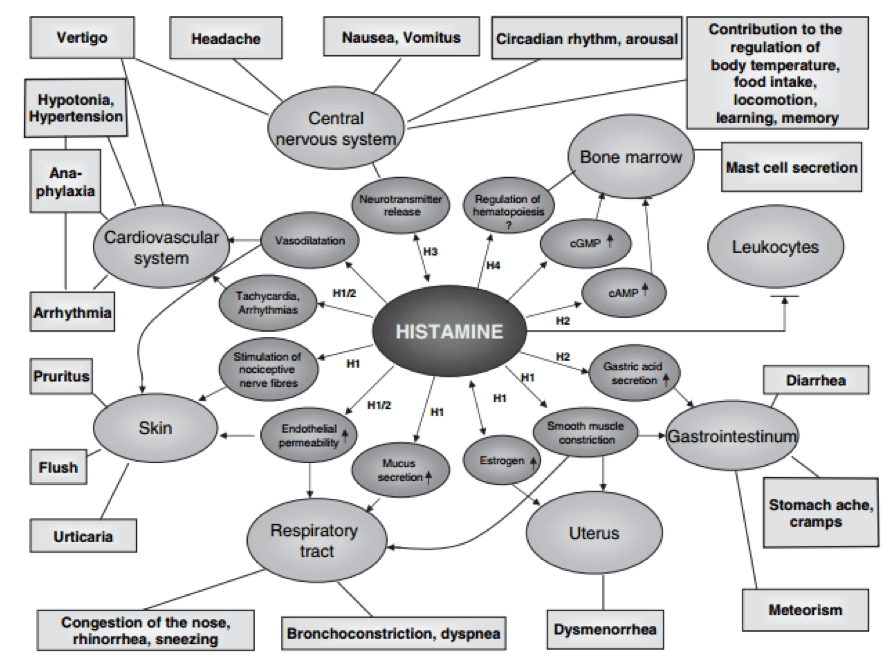
With our barrier breached undigested food particles can get into our bloodstream where our immune system reacts by making antibodies and histamine. Histamine can exacerbate the inflammation and make it more leaky and can also travel to other areas of the body creating more symptoms.
Histamine has only recently been identified as causing more than hay fever and hives. From 2010 scientists realised that the mast cells (white blood cells that release histamine) were behaving strangely and two new disorders were identified; Mast Cell Activation Disorder (MCAD) and Mastocytosis. Histamine from food reactions can masquerade as food poisoning, gastroenteritis or parasite infestation. When incorrectly treated with antibiotics the symptoms can become worse as the antibiotic treatment can make the gut more inflamed and more leaky.
Gastric inflammation caused by the histamine release can irritate the Vegus nerve; the largest nerve in the body that has branches to the chest, lungs, heart, abdominal and reproductive organs. When irritated it can send incorrect signals and produce chest pain, palpitations and numbness or pain in the shoulders or arms . These symptoms can be frightening as they mimic a heart attack. Epigastric pain and nausea can mimic a gall stone, abdominal pain with nausea and vomiting can mimic appendicitis. Many people have had their appendix or gallbladder removed after these attacks only to find it was perfectly healthy.
People with MCAD will often refer to these episodes as attacks and usually remember their first one well as they ended up in the emergency department. Attacks usually follow the same pattern and over time become more frequent. Most doctors are baffled and most patients are frustrated as the blood tests, CT scans, MRI's, X rays, colonoscopies, ultrasounds etc. fail to show any reason for the symptoms. Symptoms will settle within a few hours or days as the body breaks down the histamine and often won't return until the histamine levels in the body rise slowly to meet a threshold or rise dramatically due to ingestion of a high histamine food or a histamine reaction to a trigger food.
Treatment for these conditions has to revolve around food and our Bio-Compatibility Test is the best place to start, this way people can eliminate the foods that are at the heart of the problem. For more information contact Linda Lowen
Recent Posts